A life-size humanoid robot, printed part by part
Over two school years the robotics club at ESGC printed, wired and assembled a full InMoov humanoid, and rebuilt the 3D printer that made it when the part count outgrew the machine.
- When
- 2018 to 2019
- Where
- Clube de Informática, Programação e Inovação, ESGC
- My part
- Printing, assembly, wiring, demos
- Outcome
- Awarded at the national final
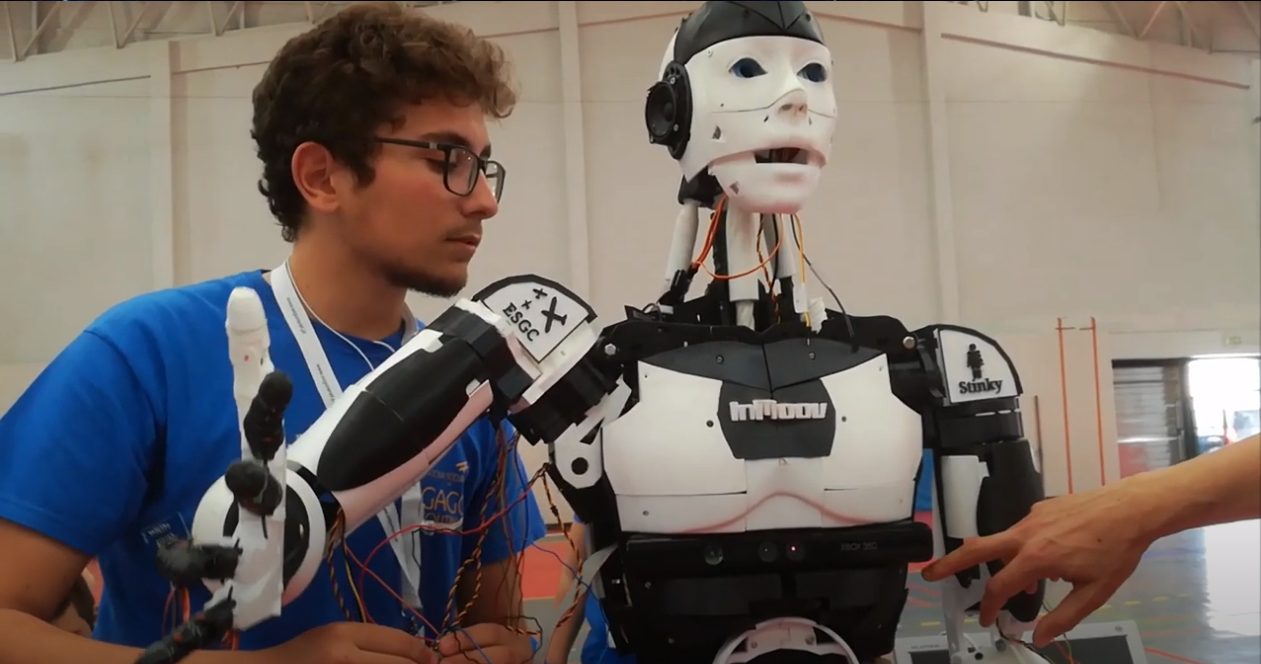
What InMoov is
InMoov is an open-source, life-size humanoid robot designed to be printed on a consumer 3D printer. The files are free, everything else is not. Each limb is dozens of separate parts that have to be printed, cleaned up, fitted, and then driven by servos that all need wiring, calibrating and a power budget that does not brown out the controller.
We built one from nothing, in a school computer room, across two academic years.
Printing it
The print queue ran for months. Parts came off the bed in batches, got deburred and test-fitted, and went into labelled boxes until a whole assembly was ready. Anything that warped or snapped under load got reprinted, usually with different infill or a different orientation on the bed.
Roughly halfway through, the printer became the bottleneck. We stripped it down and rebuilt the electronics with a new mainboard, a new power supply, and the whole loom re-run and colour-coded so a fault could actually be traced instead of guessed at. That rebuild is the single most useful thing I learned from the project, because the tool is part of the project.
Making it move
Servos throughout the arms, hands, neck and jaw, driven from Arduino controllers. A Kinect sensor mounted in the torso gave it vision, and its feed was shown on a monitor next to the robot at demos so visitors could see what it saw. Several heads were printed and finished in different colours and styles, swappable on the same neck.
Showing it
The robot went to school open days and then to the national final of the Concurso Clubes de Programação e Robótica 2018/19, where the team was awarded in the open category. Demoing it was its own engineering problem, between transporting a full-height humanoid, re-seating connectors that shook loose in the van, and debugging on a gym floor with a queue of people waiting.
What I took from it
- Hardware fails in ways software does not, and it fails in front of an audience.
- A long build only finishes if it is broken into batches that each end in something testable.
- Fixing your tooling is not a detour from the work, it usually is the work.
Eighteen photos from the build
Select any photo to enlarge it.
-
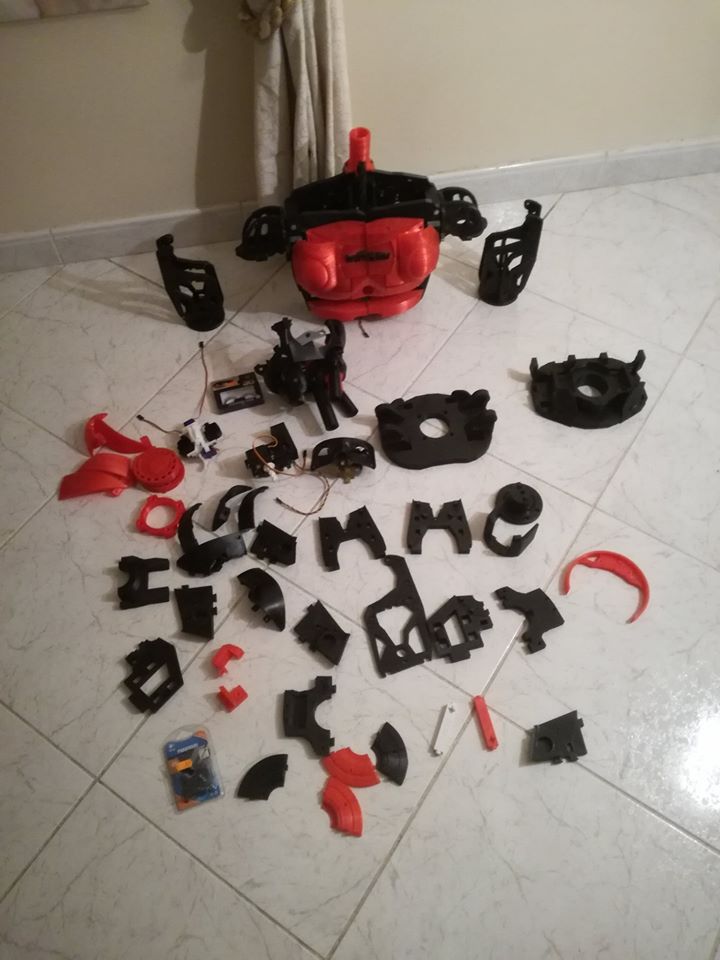
Printed parts waiting for assembly. -
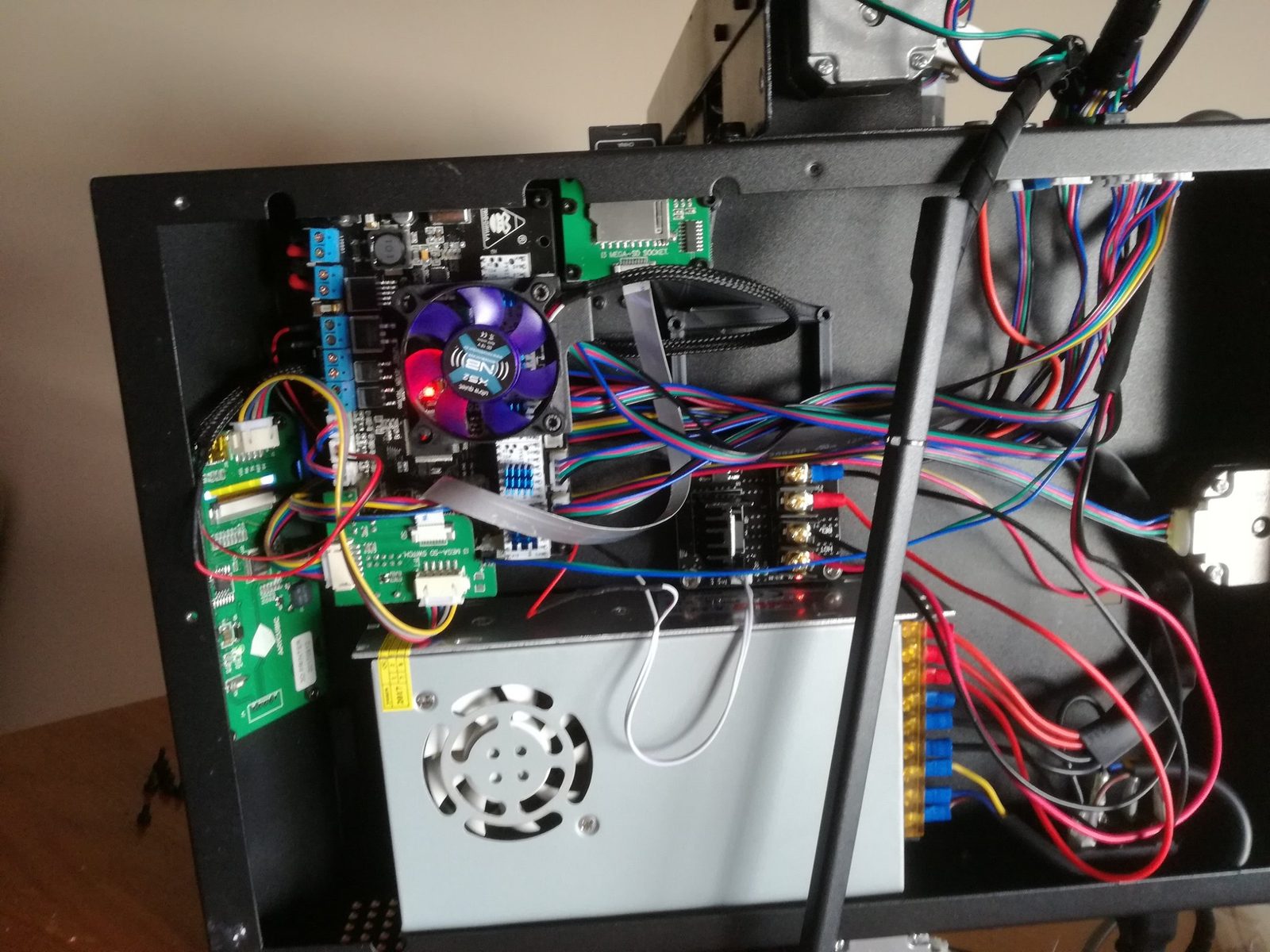
Rebuilding the printer with a new mainboard, PSU and wiring. -
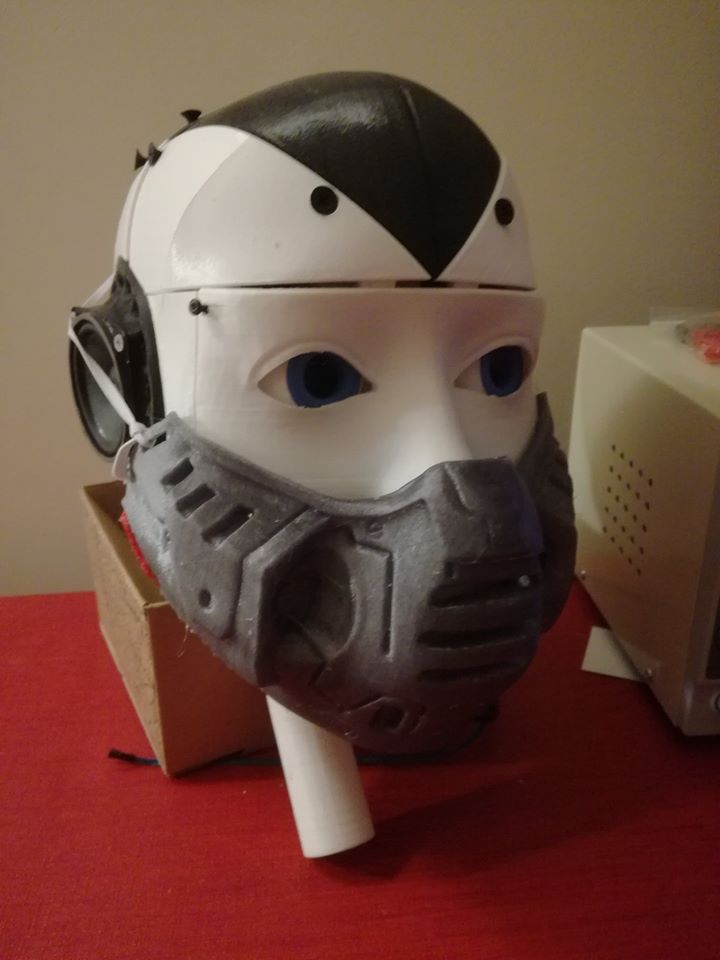
A finished head with a custom printed mask. -
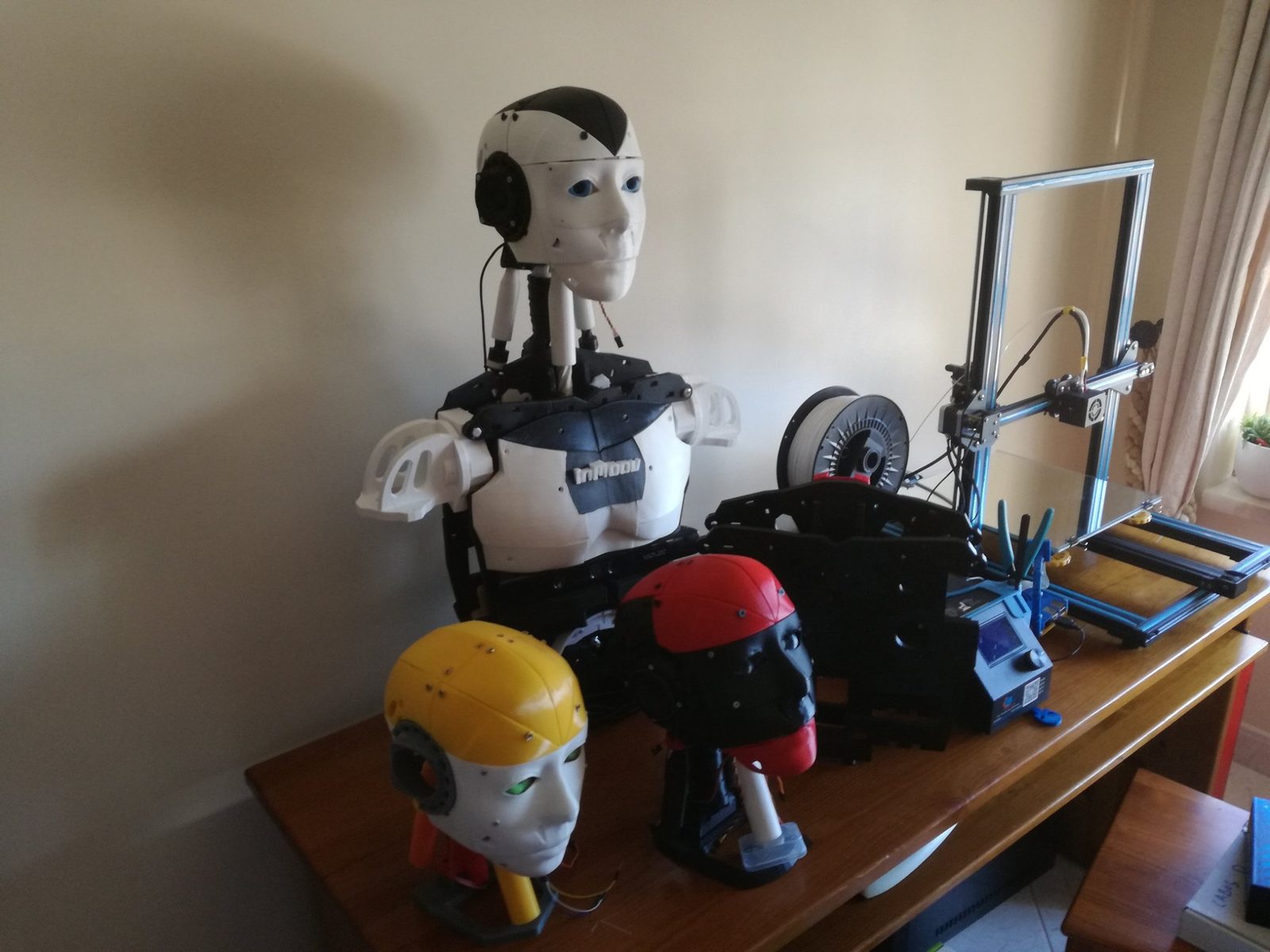
Torso, spare heads and the printer that made them. -
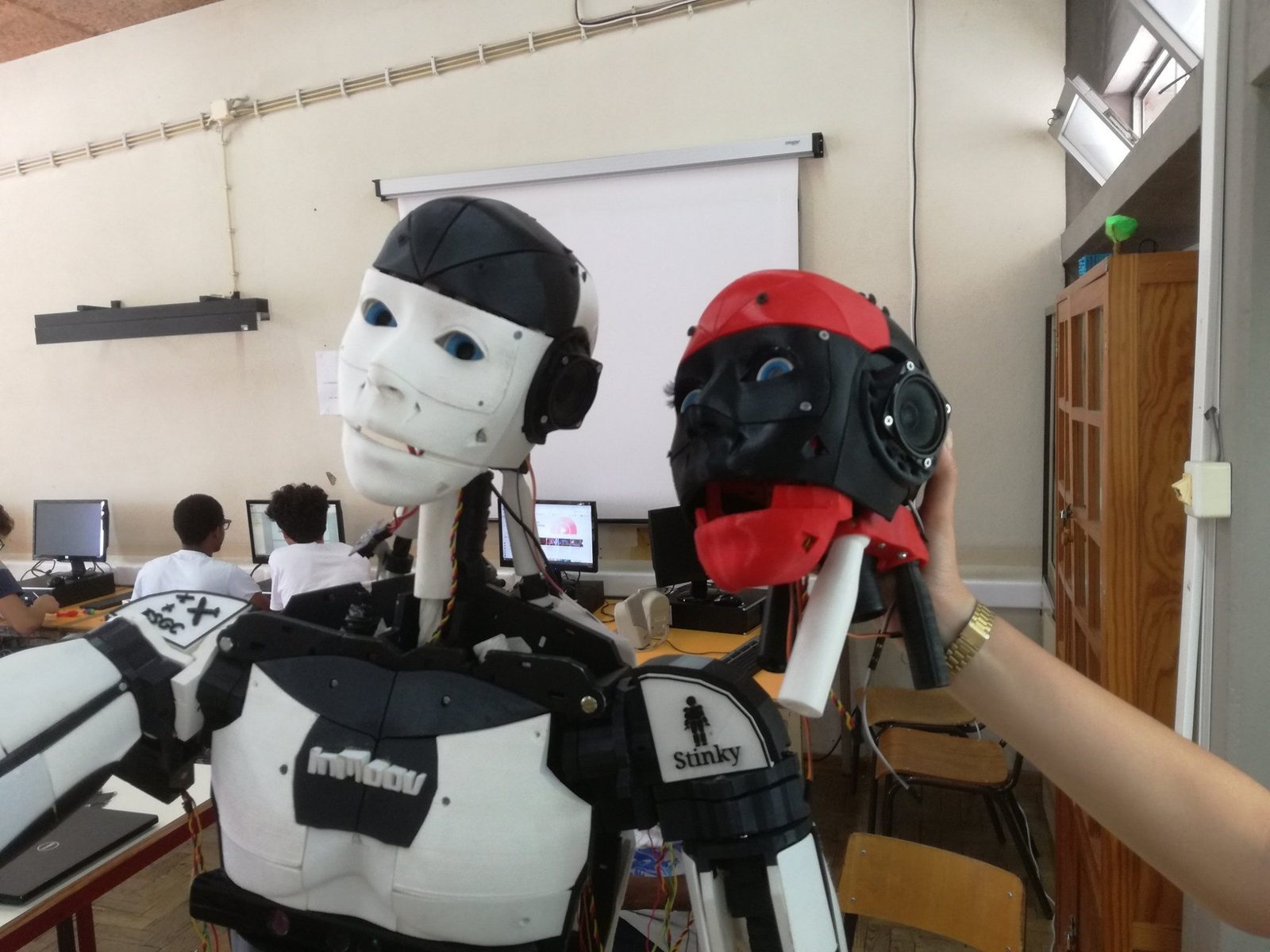
Comparing two head builds in the school lab. -
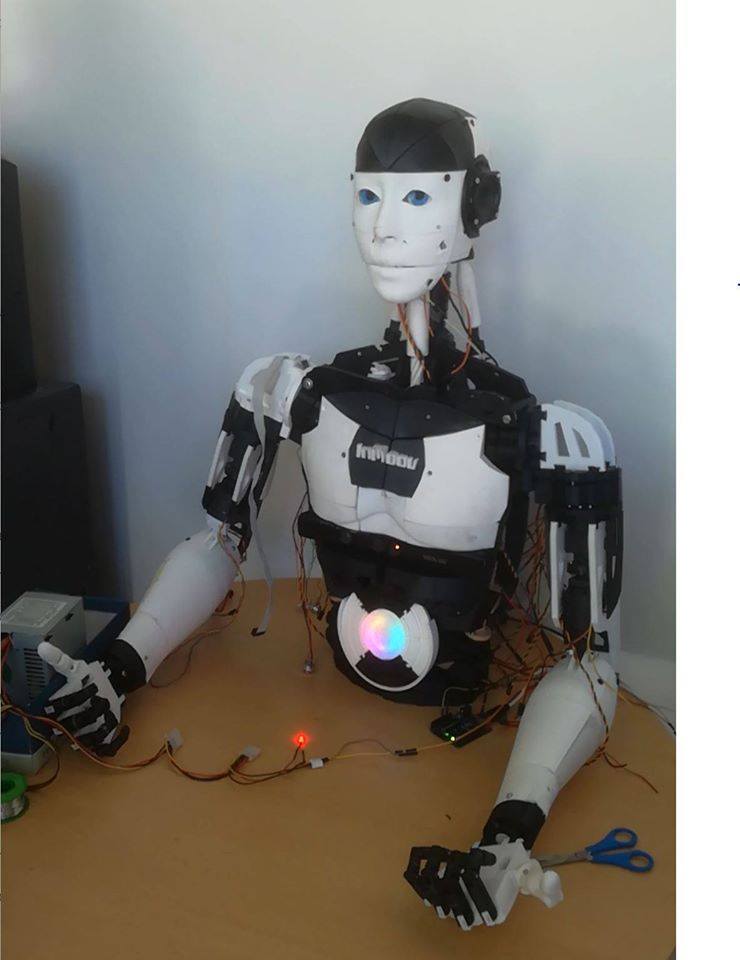
Both arms wired and powered up on the bench. -
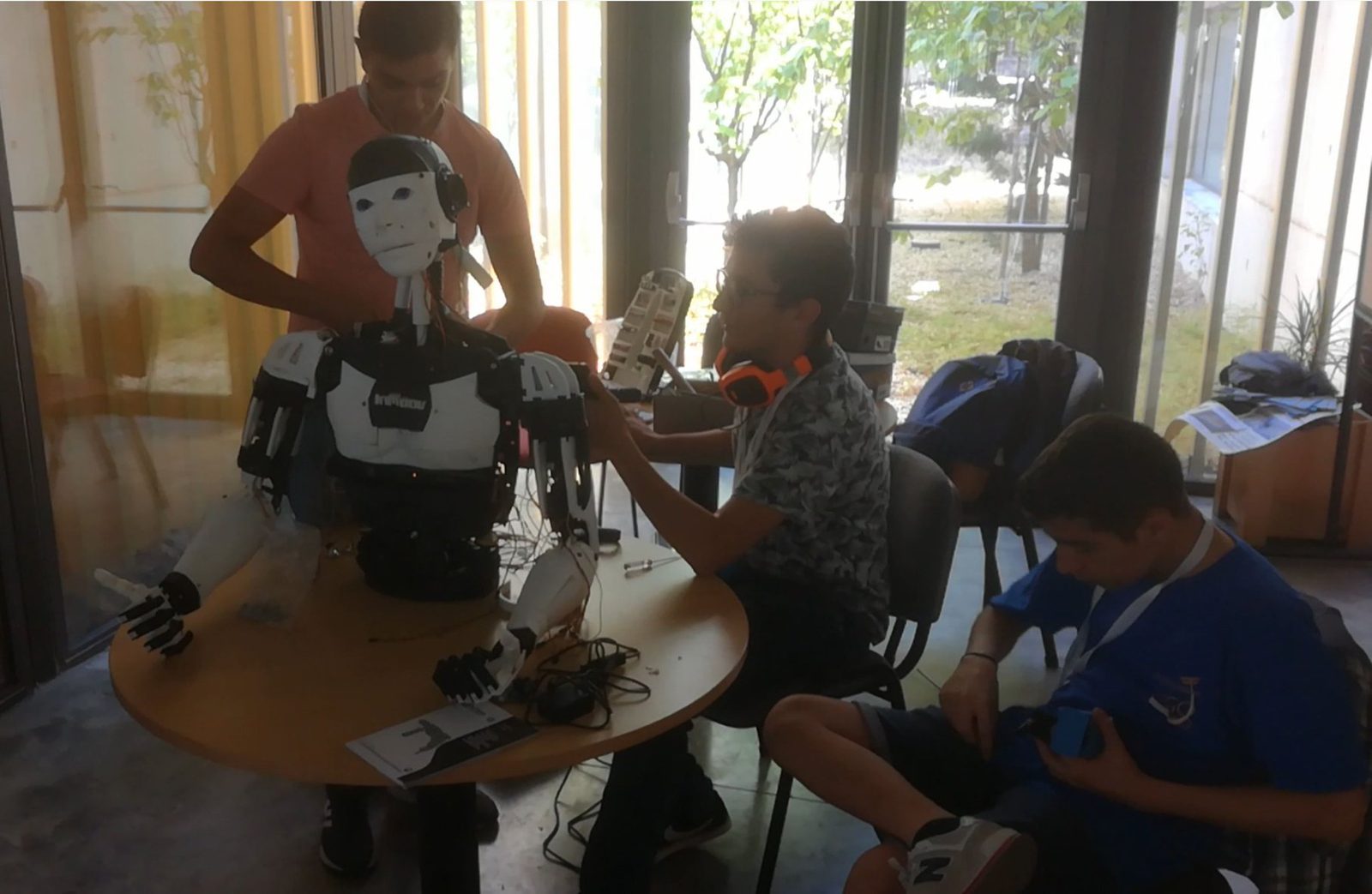
Final assembly before a demonstration. -
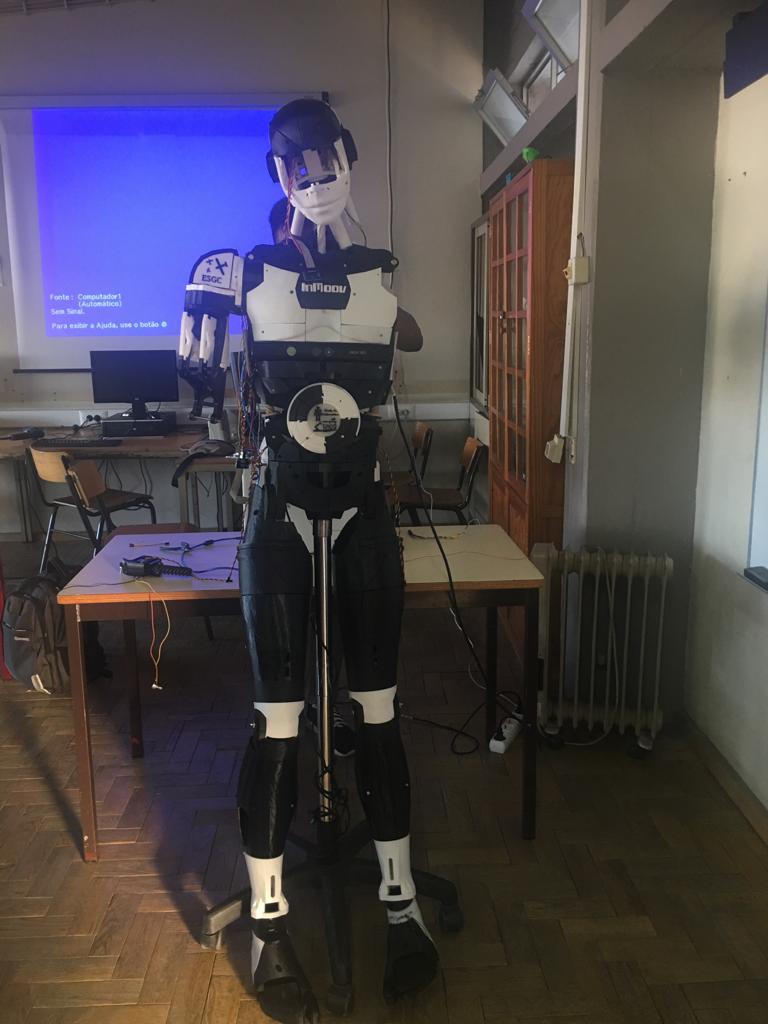
Standing at full height for the first time. -
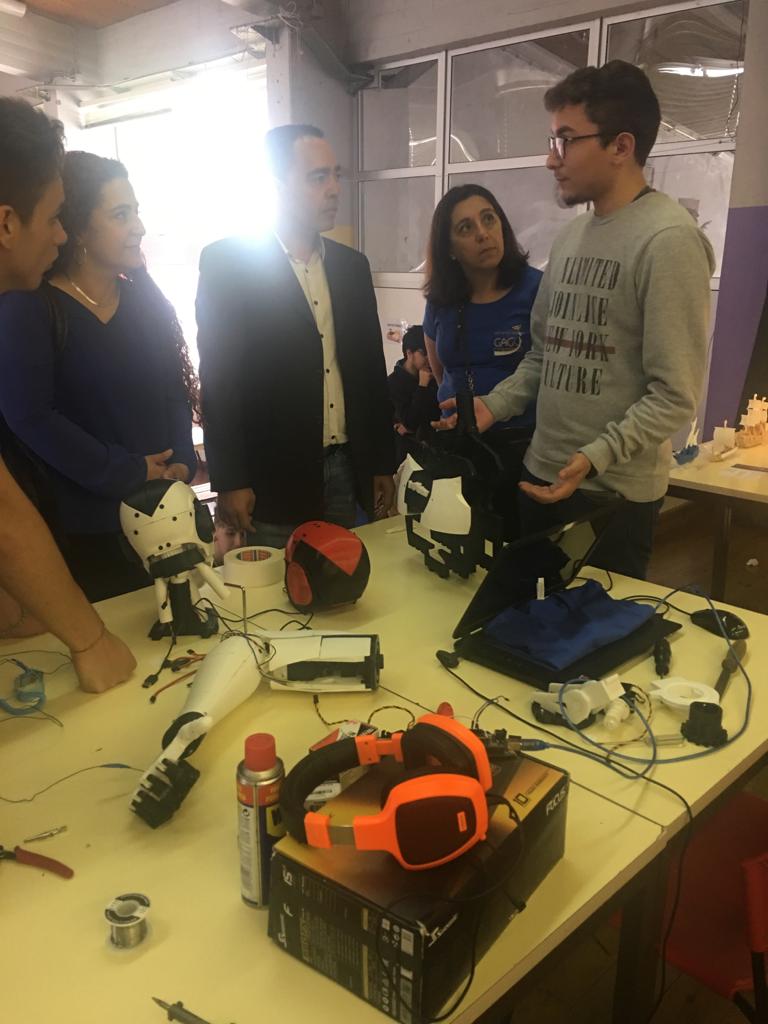
Explaining the build to visitors at an open day. -
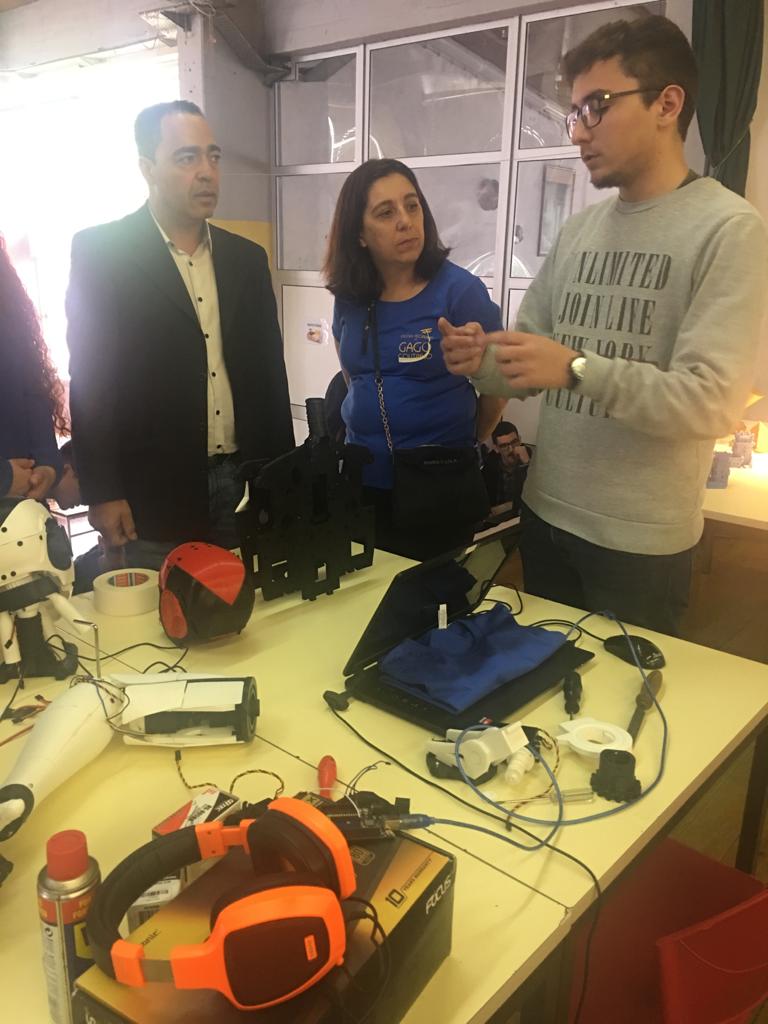
Walking through the electronics. -
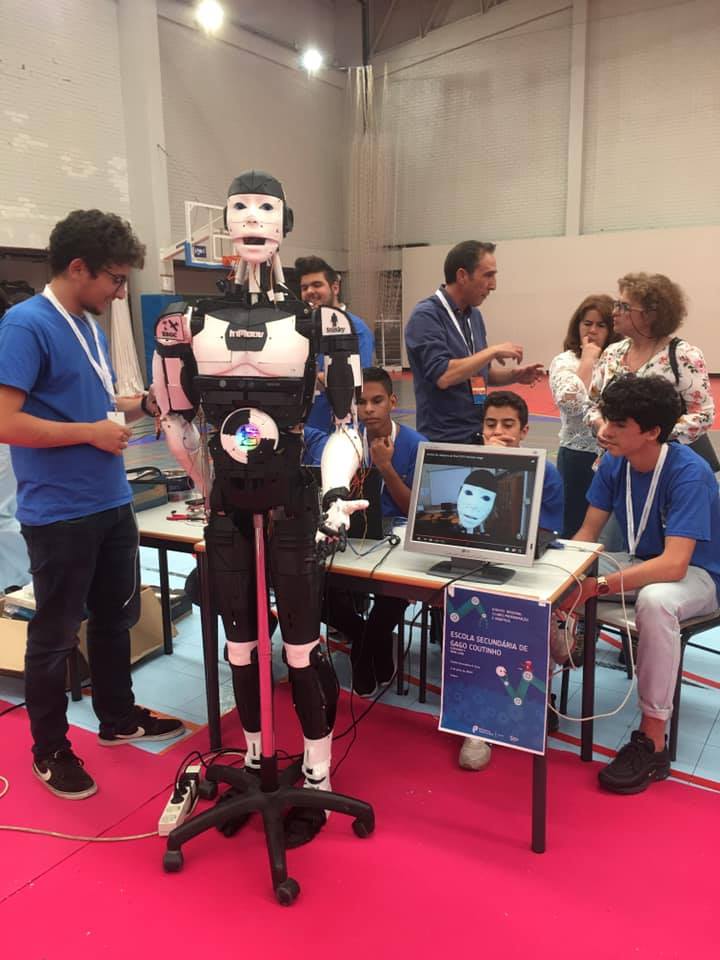
On the competition floor, camera feed on screen. -
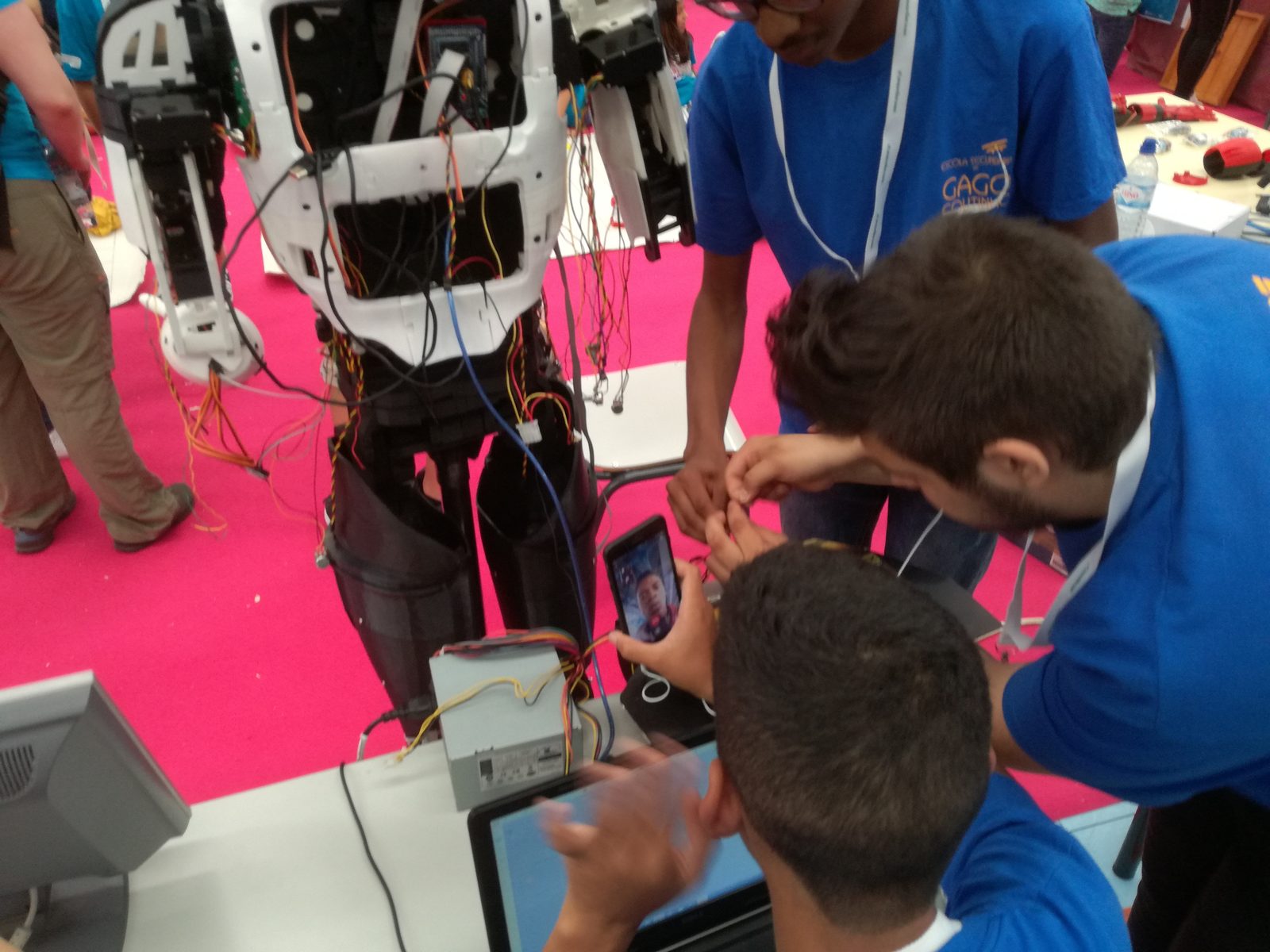
Debugging mid-event. -
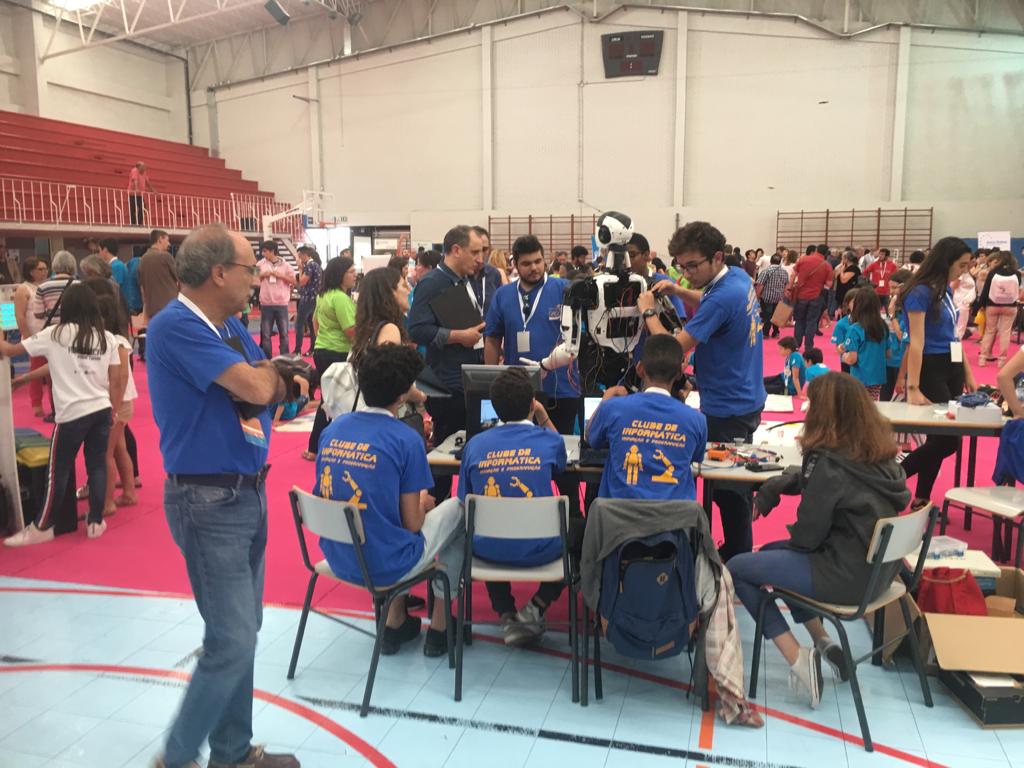
The club's stand at the national final. -
The finished robot meeting the public. -
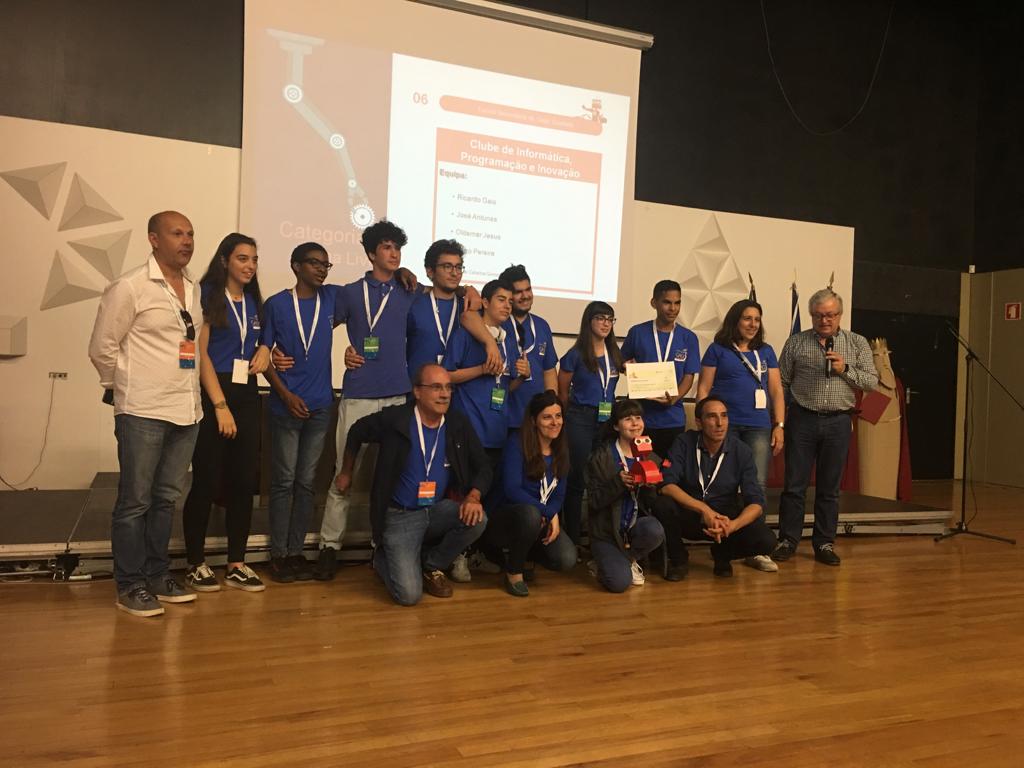
The award on stage at the national final, 2019. -
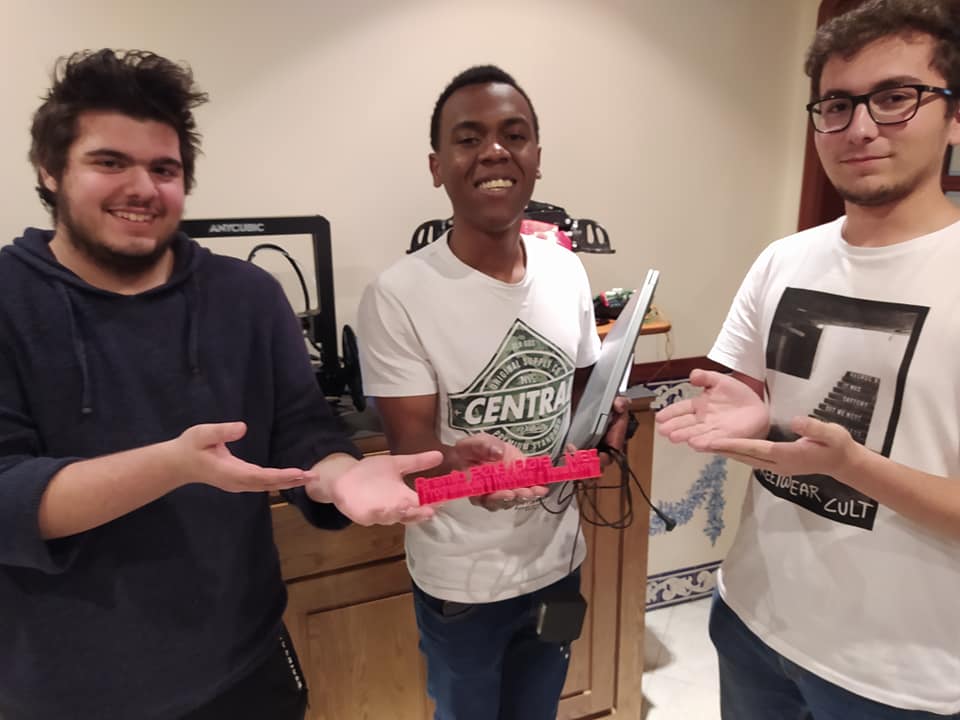
The trophy, 3D-printed by the team. -
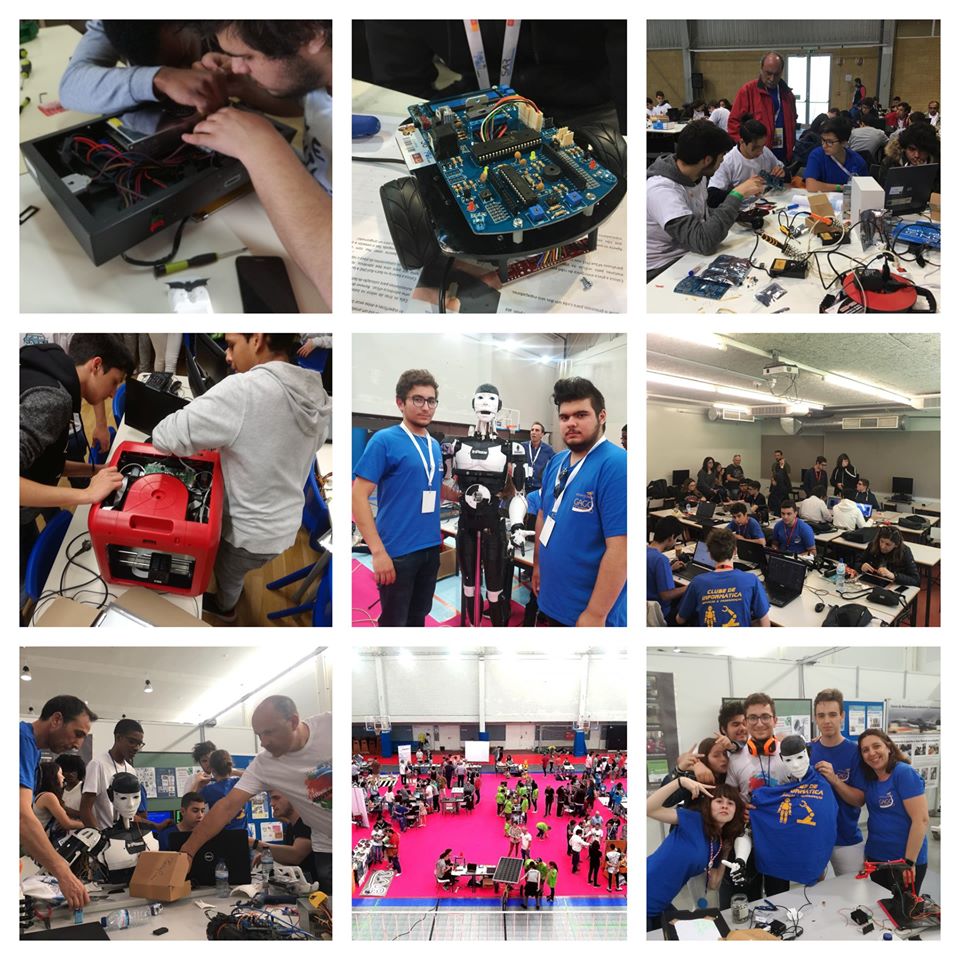
A season with the club, in nine frames. -
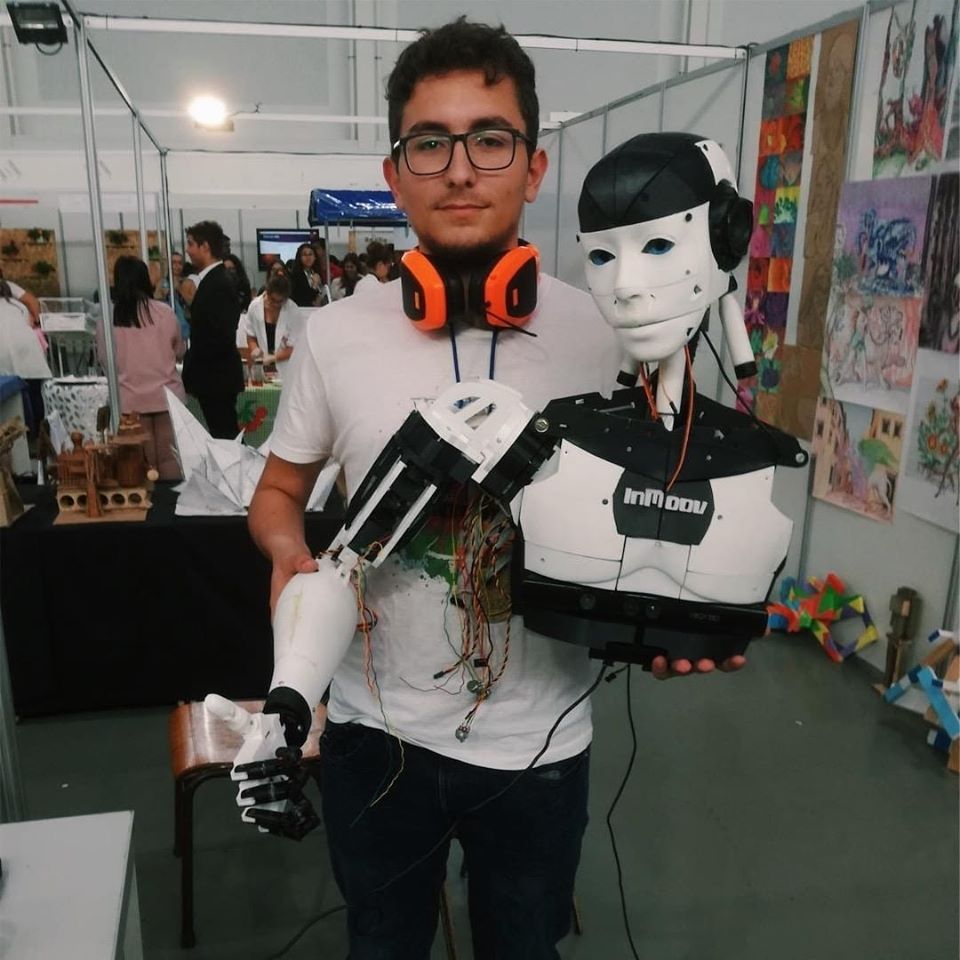
Carrying the build to an exhibition.